Makkah is hot in every month. The coolest months are December to February, when the average daytime high is 31 to 33°C and nights are about 19 to 21°C. From May to September the average high is 42 to 44°C and nights stay near 28 to 30°C.
The figures below come from the World Meteorological Organization climate normals for 1991 to 2020, recorded at the Makkah weather station. They are long-term averages, not a forecast for your travel week. Check a current forecast a few days before you fly, and read the packing section before you choose your dates.
Makkah temperature and rainfall for every month
This table shows the average daytime high, the average night-time low and the rain recorded in each month. “Rain days” counts days with at least 1 mm of rain.
| Month | Average high | Average low | Rain (mm) | Rain days |
|---|---|---|---|---|
| January | 30.9°C | 19.2°C | 20.7 | 1.8 |
| February | 32.6°C | 19.9°C | 2.5 | 0.3 |
| March | 35.4°C | 21.8°C | 5.2 | 0.6 |
| April | 39.0°C | 25.1°C | 8.3 | 0.7 |
| May | 42.4°C | 28.1°C | 2.6 | 0.3 |
| June | 43.9°C | 29.3°C | 0.0 | 0.0 |
| July | 43.2°C | 29.8°C | 1.4 | 0.1 |
| August | 42.9°C | 30.1°C | 5.8 | 0.8 |
| September | 42.9°C | 29.2°C | 6.3 | 0.7 |
| October | 40.4°C | 26.5°C | 14.1 | 1.1 |
| November | 35.6°C | 23.4°C | 23.2 | 1.7 |
| December | 32.5°C | 20.7°C | 14.7 | 1.3 |
Over a whole year the average high is 38.5°C and the average low is 25.3°C. Total rainfall is 104.6 mm, spread over roughly 10 days with at least 1 mm. Makkah’s rain tends to arrive in short, heavy bursts rather than steady drizzle.

What is the coolest time to go to Makkah?
December, January and February are the coolest months. In the 1991 to 2020 record, January has an average high of 30.9°C and a low of 19.2°C, and February is 32.6°C and 19.9°C. The station recorded no day in any month with a minimum at or below 10°C, so even the coldest nights are mild by UK standards.
“Coolest” still means warm. In January the average high is above 30°C on about 22 days of the month, and in February on about 23 days. A UK winter coat is not needed. A light jumper or cardigan for air-conditioned hotels and for early mornings is enough for most people.
What is the hottest time to go?
June is the hottest month on average, with a daytime high of 43.9°C, followed by July at 43.2°C. From May to September the average high stays between 42.4°C and 43.9°C. The highest temperature the station has recorded in this period is 51.4°C in June.
Nights give little relief in summer. The average low is 29.3°C in June, 29.8°C in July and 30.1°C in August, so the air stays hot after dark. If you are travelling with older relatives, young children or anyone with a heart, lung or kidney condition, the summer months need careful thought, and a conversation with your GP before you book is sensible.
The shoulder months: March, April, October and November
These months sit between the two extremes, and they change quickly.
- March has an average high of 35.4°C and a low of 21.8°C. Mornings and evenings are comfortable, and the middle of the day is hot.
- April averages 39.0°C by day and 25.1°C at night. The temperature is already close to summer levels by the end of the month.
- October averages 40.4°C by day and 26.5°C at night, still much closer to summer than to winter.
- November drops to 35.6°C by day and 23.4°C at night, and is also the wettest month of the year in the station record, with 23.2 mm.
If you want milder weather but cannot travel in December to February, November and March are the best of the in-between months on these figures.
How much does it rain in Makkah?
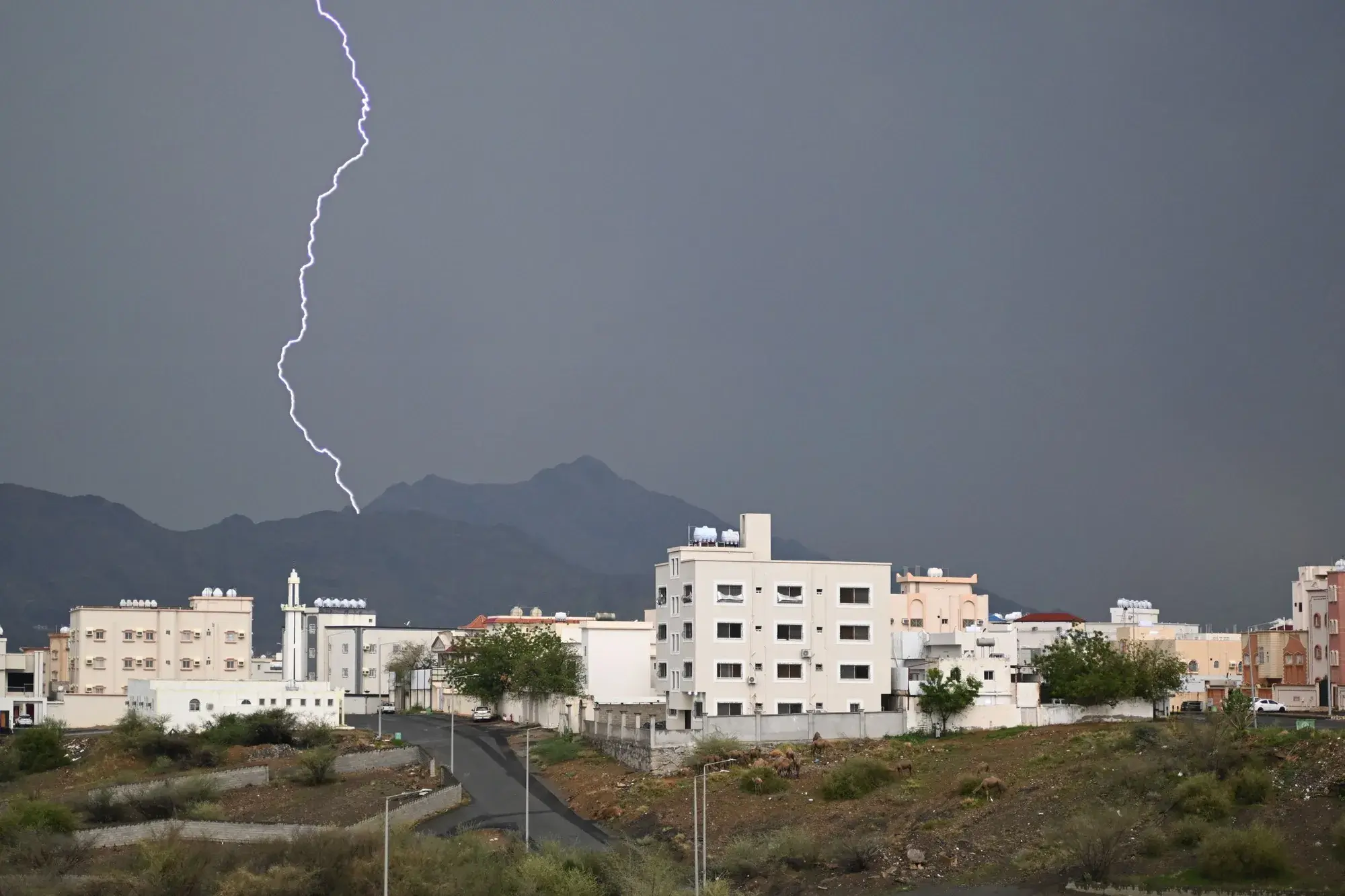
Not much, but it is not zero. The wettest months in the record are November (23.2 mm), January (20.7 mm) and December (14.7 mm), followed by October (14.1 mm). June has no recorded rain on average, and February, May and July each average under 3 mm.
Rain falls on few days, but when it does it can be heavy. The highest single-day rainfall the station has recorded is 65.2 mm, in January. The station records an average of 3.3 days a year with at least 10 mm. If your dates fall between October and January, pack a light packable rain jacket and shoes with grip, because polished stone floors and steps are slippery when wet.
How sunny is it?
Very. The Wikipedia climate table for Mecca, which attributes its sunshine figures to the Saudi National Center for Meteorology, lists between 8.0 and 10.7 hours of sunshine a day on average. The lowest figure is December at 8.0 hours and the highest is June at 10.7 hours. We treat these as indicative, because we could not check them against the original dataset. In practical terms, expect strong sun in every month, so sun protection matters even in winter.
What to pack
Pack for the temperature range of your travel month, but keep a few things the same all year.
All year
- Light, loose clothing in breathable cotton or linen. Dark synthetic layers trap heat.
- Comfortable, well broken-in walking shoes or sandals that are easy to take off and carry. You will walk a lot on hard floors.
- A refillable water bottle and a small bag you can carry hands-free.
- Sunscreen, a hat or cap, and sunglasses. The sun is strong in every month of the year.
- Any regular medicines in their original packaging, with the paperwork described in our Umrah visa guide.
- A plug adapter and a power bank.
December to February
- A light jumper or cardigan for cool mornings, evenings and strong air conditioning.
- Light clothing is still right for the day, as the average high is above 30°C.
- A packable rain jacket, as January and December are among the wetter months.
March, April, October and November
- Lightweight clothing, with one extra layer for evenings in March and November.
- Strong sun protection, especially in April and October when it is already close to 40°C.
- A small umbrella or light rain jacket for October and November.
May to September
- The lightest, most breathable clothing you own, and more than one change of clothes per day.
- Electrolyte sachets, a cooling towel and a small handheld fan.
- Plan your time outdoors for early morning and after sunset. Rest in the hotel through the hottest part of the afternoon.
- A water bottle you actually use. Drink before you feel thirsty.
How a trip from the UK differs
Flying from a UK airport, you leave a cool or mild climate and arrive in heat that your body has not adjusted to. This matters most for the first two days.
- In winter the change is large. You may leave Manchester, Birmingham, London or Glasgow in coats and land in conditions where a T-shirt is comfortable at midday. Wear layers on the flight so you can take them off on arrival.
- In summer the change is smaller in the sense that the UK may also be warm, but 43°C is far above anything a UK summer normally produces, and the nights do not cool down.
- Jet lag and heat make you drink less than you think you need. Start drinking water on the plane and keep going.
- Your hotel room is air-conditioned in most cases, so moving between a cold room and hot outdoor air several times a day is normal. A thin layer helps.
Weather is only one part of choosing a date. Package availability, school holidays and the Ramadan period also affect what is on offer, and we have not covered those in this guide. Ask us for a written quote for the month you have in mind, and we will tell you what is available.
Ask us about your dates
We can send a written quote for any month that suits your family, from any UK airport. Tell us when you want to travel and who is coming, and we will explain the options. Get a quote or see our Umrah packages.
Frequently asked questions
What is the weather like in Makkah?
Hot in every month. The average daytime high ranges from 30.9°C in January to 43.9°C in June, and the average night-time low ranges from 19.2°C in January to 30.1°C in August. Rain is rare, with 104.6 mm in a whole year.
What is the best month to visit Makkah for the weather?
On temperature alone, December, January and February are the most comfortable, with average highs of 30.9 to 32.6°C. November and March are the next best choices, at 35.6°C and 35.4°C.
Does it get cold in Makkah at night?
Not by UK standards. The station has not recorded a minimum of 10°C or below in any month in the 1991 to 2020 period. In January the average night-time low is 19.2°C.
Does it rain in Makkah?
Yes, mostly from October to January. November is the wettest month on average at 23.2 mm, and the heaviest single day in the record is 65.2 mm in January. Summer is very dry.
Is Makkah warmer than Madinah?
Yes in winter, and similar in summer. In January the average high in Makkah is 30.9°C, against 24.4°C in Madinah. See our Madinah weather guide for the full table.
Makkah weather month by month
One page for each month, with the month before and after, rain days and what to pack.
- Makkah weather in January
- Makkah weather in February
- Makkah weather in March
- Makkah weather in April
- Makkah weather in May
- Makkah weather in June
- Makkah weather in July
- Makkah weather in August
- Makkah weather in September
- Makkah weather in October
- Makkah weather in November
- Makkah weather in December
Hotels for your Umrah trip
We list the walking distance to the Haram for every hotel and quote for your dates.
Sources
- WMO Climate Normals 1991 to 2020, Makkah station 41030 (hosted by NOAA)
- Wikipedia: Mecca, climate section (sunshine figures) (read 13 November 2026)